

Day 4 Overview at ISE 2026
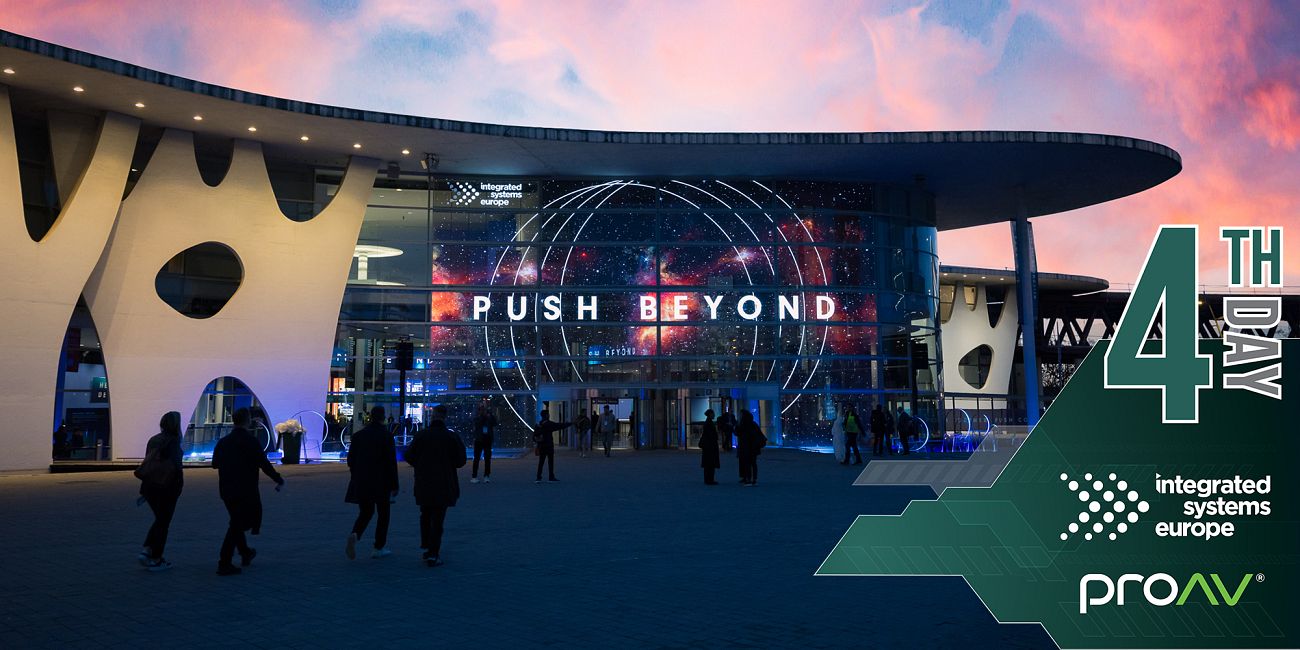
AV hardware is evolving to become more efficient, sustainable, and infrastructure-ready, with long-term reliability increasingly shaping product design.
As we approach the end of ISE, Day 4 had on offer a clear view of how AV hardware is evolving to support efficiency, sustainability, and long-term reliability. Rather than prioritising headline features or rapid refresh cycles, much of the attention was on reducing power consumption, simplifying installation, and embedding intelligence directly into displays and devices. From ultra-low-power signage and integrated compute to energy-efficient dvLED and long-life projection, the hardware on show reflected a more mature approach to AV design, where longevity, reliability, and operational efficiency are as important as performance.
Samsung

Samsung expanded its commercial display portfolio with new solutions on show at ISE, including the global debut of its glasses-free 3D Spatial Signage. The new range combines patented 3D Plate technology with 4K processing and an ultra-thin design to create immersive visuals suited to retail, museums and entertainment venues. To enable users to take full advantage of the new displays, Samsung also introduced AI Studio within its VXT platform, allowing users to turn static images into video content and automatically optimise it for 3D displays.
Away from the 3D range, Samsung continued to enhance their large-format products such as a 130-inch Micro RGB signage display and a new 108-inch version of The Wall All-in-One, designed to simplify installation while delivering high-impact visuals in premium commercial spaces.
Alongside new hardware, Samsung emphasised enterprise collaboration and integration. Several supersized displays, including the 115-inch 4K Smart Signage and The Wall All-in-One, have gained Cisco certification, ensuring compatibility with collaboration devices and management tools for large meeting environments. A new partnership Logitech also aims to help streamline Microsoft Teams Rooms deployments, enabling faster and more cost-effective meeting room installations using Samsung displays.
Neat
 Neat used ISE 2026 to unveil new additions to its portfolio, led by the Neat Board 32, a compact all-in-one video collaboration device designed for small rooms and personal workspaces. The 32-inch 4K touchscreen integrates a wide-angle camera, beamforming microphones, intelligent framing, and built-in whiteboarding to support both meetings and creative teamwork, while simple connectivity and flexible mounting make it easy to deploy. The company also introduced the Neat Pad Pro, a next-generation 10-inch touchscreen for meeting control and room scheduling, offering expanded audio pickup, environmental sensing, improved performance on Neat’s P2 platform, and broad compatibility across major video and booking platforms.
Alongside these launches, Neat highlighted its integration with the Google Meet certified hardware ecosystem, enabling Meet to run natively on supported Neat devices including Neat Bar Gen 2 and Neat Bar Pro, with Neat Boards to follow. Managed centrally through Neat Centre and enhanced by Neat’s AI-driven audio and video capabilities, the solution provides a consistent, scalable, and secure experience for hybrid workplaces, with long-term support planned through 2033.
Sharp/NEC
 SharpNEC’s stand focused on the mantra of “Focus, Now and Beyond,” highlighting precision, reliability, long-term value, and sustainable operation. The showcase spans dvLED, large format and interactive displays, projection, ePaper, and modular computing, demonstrating the ‘One Sharp’ ecosystem in which displays, IT, and services combine to deliver future-ready visual solutions for workplaces, education, public spaces, and mission-critical environments.
Among the products on show were the Sharp SDM Player with BrightSign Built-In, which integrates professional digital signage directly into the display for a cleaner, reliable, and cost-efficient always-on platform, and the SDM MPi5 Kit, which uses Raspberry Pi Compute Module 5 to provide low-power, Linux-based computing with optional Hailo AI acceleration for real-time analytics at the edge. Also featured were the EC Series dvLED with energy-efficient Flip-Chip CoB technology, delivering high contrast, durability, and reduced power consumption, the MultiSync M2 Series PCAP touch displays demonstrated with eyefactive for immersive multi-user interaction, and an expanded projector portfolio offering long-life laser technology, low maintenance, and flexible installation for applications ranging from meeting rooms to large venues.
Unilumin
.2.jpg)
At ISE, Unilumin highlighted the U-Natural, an LED Texture Screen designed to blend into interior spaces by replicating materials such as wood grain or marble. When switched off, the display visually merges with its surroundings, avoiding the disruption of conventional black screens, while when active it delivers bright, detailed images through nano optical technology that maintains high luminance, low reflectivity and accurate colour. Built on a COB and MIP structure, the screen preserves brightness, reduces colour cast and offers durability through scratch resistance, dust protection and wide viewing angles. Energy efficient operation, flexible splicing and customisable module-based patterns make it well suited to interior design, creative installations and high end commercial environments.
Expanding on alternative display formats, Unilumin presented the ultra light Udesign SV, a highly transparent LED solution that turns glass surfaces into digital screens while preserving visibility and natural light, achieving up to 95% transparency and producing bright, stable, floating visual effects. Modular panels support seamless large format displays and hanging installations, making the system suitable for retail windows, facades, atriums, exhibition halls and transport hubs where transparent advertising and immersive presentations are required.
The company also demonstrated a control room solution developed with Barco, combining the Upanel II MIP with EBL+ technology and Barco’s secure control and processing systems to deliver precise, immersive visuals, stable long term performance and strong energy efficiency for demanding operational environments.
Conclusion
As ISE 2026 concluded, it was clear that greater attention is being placed on the fundamentals of AV hardware design, with efficiency, sustainability, and long-term reliability shaping product decisions. Rather than short-term differentiation, the emphasis was on hardware built for durability, simplified installation, and consistent performance in real environments. This brings our ISE 2026 coverage to a close. If you are planning an upcoming project or would like to discuss how these developments could be applied, please get in touch here.
Share